
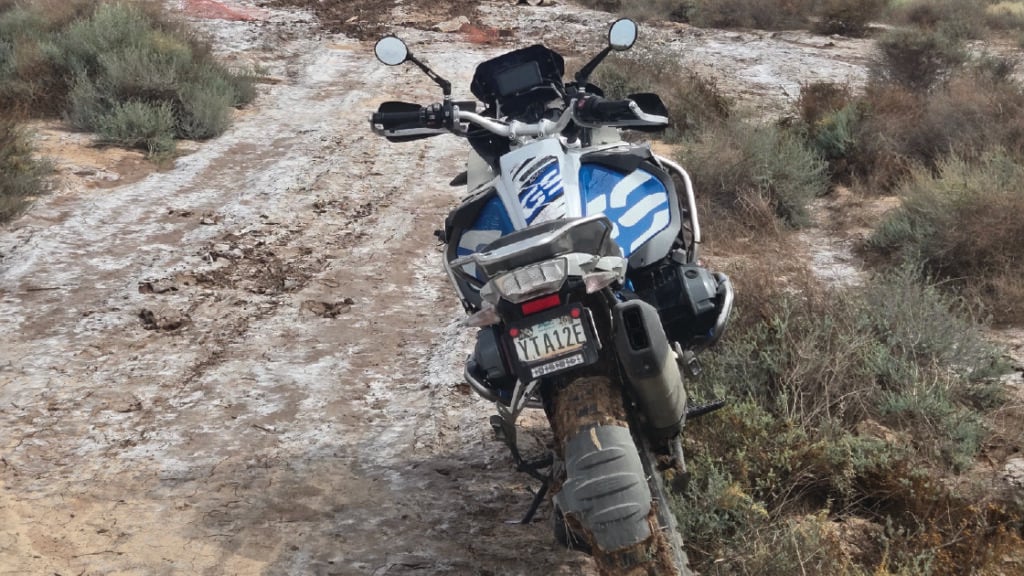
Off-road adventure (ADV) riding is more than just a hobby; it is a blend of skill, awareness, and deep respect for the environment. At Sivlik ADV, we focus on building foundational confidence and real-world techniques to help you transition safely from pavement to dirt.
This guide covers what we want every rider to know before their first Sivlik training day: how to gauge your riding level, the core skills that matter, what to pack, and how to ride with respect for the land you’re on.
What You’ll Learn
- How to identify your current off-road riding level before you sign up for training
- The core body-position and control skills every off-road rider needs
- What gear actually matters for a day on the trail
- How to pack a bike for a multi-day tour using the Zone Method
- Why riding on shared and tribal land comes with real responsibilities
- What the research says about formal rider training and crash risk
Understanding Your Riding Level
We use training levels as a tool for progress rather than a badge of honor. Identifying your current level helps match you with the right training to ensure success.
- Level One (Starting Fresh): Ideal for those new to off-road or transitioning from street riding. Focuses on low-speed balance, body position, and becoming comfortable with loose terrain.
- Level Two (Gaining Traction): For riders with some dirt experience who are ready to tackle varied terrain like mild hill climbs, sand washes, and light trail flow.
- Level Three (Personal Exploration): Advanced riding involving technical single tracks and mountain passes. While not offered as a standard course, it represents the level used for personal exploration by seasoned riders.
For the full breakdown of what each level covers, see Understanding Off-Road Motorcycle Training Levels, or explore an upcoming Sivlik ADV training session.
Core Skills for the Trail
Off-road riding requires active engagement of the entire body. Transitioning from road habits is critical for safety and control.
Body Position and Balance
- Standing on the Pegs: This lowers the bike’s center of gravity and allows it to move more freely over uneven surfaces. Keep knees and elbows slightly bent to absorb the trail.
- Counterweighting: Unlike street riding where you lean into turns, off-road turns require counterweighting: pushing the bike down while your body stays upright or leans to the outside.
- Light Hands: Maintain a light grip on the bars to allow the front wheel to track through obstacles without over-correcting.
Control Management
- The Friction Zone: Master using one or two fingers on the clutch to modulate speed with precision during low-speed maneuvers.
- Braking Technique: Use a combination of both brakes. The front brake must be modulated gently on loose surfaces to prevent locking, while the rear brake provides essential stability.
- Throttle Control: Roll on the throttle smoothly. Abrupt inputs can cause an immediate loss of traction on gravel or dirt.
These are the fundamentals we build every Sivlik training day around. See the full training curriculum for how we structure the range work.
Essential Gear and Preparation
Being prepared can turn a stressful trail incident into a manageable situation.
| Category | Essential Items |
|---|---|
| Protective Gear | Helmet (ventilated), off-road boots with ankle support, armored jacket/pants, and gloves. |
| Tools & Spares | Compact tool roll, tire repair kit, and basic spares (levers, etc.). |
| Safety & Nav | Navigation device (offline maps), first-aid kit, and an emergency satellite SOS device. |
| Endurance | Hydration pack (water) and lightweight, high-energy snacks. |
For the complete gear list, item by item, read Essential Gear for Off-Road Motorcycle Tours in the Southwest.
Strategic Packing (The Zone Method)
When preparing for multi-day tours, how you pack influences the bike’s handling and your overall fatigue.
- Low and Center: Heavy items like tools, spares, and tire kits go here to maintain a stable center of gravity.
- Left Pannier: Generally reserved for sleeping gear (tent, bag, and pad).
- Right Pannier: Clothing, ideally technical fabrics that dry quickly, and personal essentials.
- Top Case/Duffle: Quick-access items like rain layers, first-aid, water, and snacks.
For the full packing walkthrough, read How to Pack Smart for a Multi-Day Motorcycle Tour.
Safety and Stewardship
Riding off-road is a shared responsibility between you, your group, and the land.
- Group Dynamics: Always maintain visual contact with the “one up, one down” rule. Establish hand signals and check-in points before the ride starts.
- Summer Pacing: In high temperatures, stop every 3-5 miles to hydrate and reset. Recognize that fatigue leads to slower reaction times and shallow breathing.
- Cultural Respect: Much of our riding occurs within the Gila River Indian Community. Staying on marked routes protects cultural sites and respects the land of the Akimel O’odham.
Sivlik means “Whirlwind” in the Akimel O’odham language, the name my grandfather gave me, and it’s why I chose it for this business. When you ride with us on this land, you’re riding through the home of the Akimel O’odham (River People) with someone who grew up here.
Formal rider training measurably changes outcomes. Idaho’s STAR advanced rider training program, tracked by the National Highway Traffic Safety Administration, is associated with a 79% reduction in crash risk and an 89% reduction in fatal crash risk compared to untrained riders. (NHTSA)
The Benefits of “Wind Therapy”
Off-road riding offers profound mental and physical benefits. It requires complete presence, which helps quiet the mind and reset after stress. Every mile on the trail builds core stability, joint coordination, and postural endurance, translating to strength and stability in everyday life.
Whether you are seeking a mental reset or looking to hone your technical skills, the trail provides a unique path to confidence and clarity. I wrote more about this in Wind Therapy: The Mental Reset Only a Motorcycle Can Give You.
Frequently Asked Questions
Do I need off-road experience to take an ADV training course?
No. Sivlik’s training is built for experienced street riders transitioning off-road, not for people who have never ridden a motorcycle. You need basic street riding skills and your own adventure-style motorcycle. The training itself teaches off-road-specific skills from there.
What’s the difference between Sivlik’s Training and a Tour?
Training is a range-only, skills-focused day built around the Motorcycle Safety Foundation’s AdventureBike RiderCourse (ADVRC) curriculum. A Tour puts those skills to use on an actual guided ride through the Gila River Indian Community, with history and culture woven into the route.
How long is a Sivlik ADV training session?
A standard training day runs approximately six hours, one day, range-only.
Do I need my own motorcycle?
Yes. For Training and the Sivlik Tour, you’ll need your own adventure-style motorcycle. Blacktop Tours are the exception: any street-legal bike is welcome.
What if I want to ride a Backcountry Discovery Route (BDR) someday?
That’s exactly the kind of rider our Level 3 training is built for. As an official Backcountry Discovery Routes Ambassador, I’ve ridden these routes myself, including a solo run of the Montana BDR, and I build that real-world experience into advanced training.
